C-Section Recovery Belt Kit blog

Care After C-Section Tips with Belt, Bellyband and Massage * At Home care *Tips *C/S Scar Care* Compression* Best Hospital, Doula, or Baby Shower Gift

  • Home
  • Birth & Pregnancy
    • Birthing Stories
    • After Childbirth
    • Massage
    • Pregnancy Support
    • Pregnancy Support Belts
    • Womens Health
  • C Section Birth
    • Cesarean Surgery Processes
  • C section Recovery
    • Belly Band
    • C Section Healing
    • C Section Pain
    • C Section Scar
  • Find Medical Tips
  • Healthcare Products
  • Contact
You are here: Home / Archives for Get Medical Tips

The Health Risks of Early Elective and C-section Births

January 3, 2011 by C-Section Recovery admin Leave a Comment

Recent years have seen a dramatically increasing number of women giving birth early. Experts are now saying that these early births pose new health risks to both mothers and newborns.

So significant is this increase that the average time of fetus gestation has been reduced by seven days in the United States since 1992, according to researchers and data from the Centers for Disease Control and Prevention. This trend is being called an evolutionarily dramatic event.

Researchers say that the increasing number of women and doctors now scheduling childbirth for convenience parallels the shortening pregnancies. A 2007 study of nearly 18,000 births showed that almost 10 percent were early births due to scheduled inductions or C-sections for non-medical reasons.

Shorter pregnancies can affect a babys lung development, vision, weight, and some fine-tuning of the brain, according to doctors.

For every day and every week before 39 weeks, it’s an increasing risk to the baby, said Dr. Bryan Oshiro, vice chairman of obstetrics and gynecology at Loma Linda University. The vast majority of early term babies do fine, but it’s like playing Russian roulette.

The California Maternal Quality Care Collaborative, a task force of medical researchers, has recently focused inattention on how many babies are delivered for non-medical reasons before they would arrive naturally. Until now it has been an issue confined to articles in medical journals and among maternal health professionals.

A normal pregnancy length is 40 weeks, and induced delivery at a full 39 weeks is thought probably safe. Women often naturally give birth earlier than this, and in some cases, medical problems require an early delivery. Problems arise when babies are delivered before they are ready.

According to national vital statistics, between 1990 and 2006, the number of babies born at 36 weeks increased around 30 percent, and babies born at 37 and 38 weeks rose more than 40 percent, At the same time a corresponding drop in the number of babies born in later weeks is seen in the data. There are now more babies born at 39 weeks than at full term. The data examined is considered ‘fresh’ by academic standards and covers such a long period of time (16 years) that experts say the trend is unmistakable. Lack of knowledge among both doctors and patients seems responsible for this trend.

Babies born early through induction or C-section without a medical reason are nearly twice as likely to spend time in the neonatal intensive care unit, researchers say. They also are more likely to contract infections and need the assistance of breathing machines, according to a 2009 study in the New England Journal of Medicine and a number of other reports.

Many organizations are responding with programs designed to eliminate early elective deliveries. Most significantly, chapters of the American Congress of Obstetricians and Gynecologists have begun to notify doctors about the serious consequences of performing early elective births.

In California, the state Department of Public Health, March of Dimes and California Maternal Quality Care Collaborative have released what its authors call the Toolkit, which recommends that, unless medically necessary, c-sections and artificial induction of labor before full gestation should be eliminated.

The state chapter of the American Congress of Obstetricians and Gynecologists is also supporting this recommendation. To support this they are holding teaching sessions and reaching out to obstetrics leaders at every hospital in the state. At the same time, doctors groups are initiating the toolkits guidelines in New York, Florida, Illinois and Texas.

Part of the problem has to do with education, said Kowalewski, one of the authors of the Toolkit. Because we learn that human gestation lasts nine months, many people think that 36 weeks is full term. It’s a misconception even within the March of Dimes, which has worked for years to teach people about infants born too early.

While there is evidence that some women seek early delivery before week 39, there is also significant evidence that doctors are driving some of the rise in earlier births. In 1979, the American Congress of Obstetricians and Gynecologists began advising doctors not to do elective inductions before 39 weeks gestation, but early elective deliveries have continued to rise, except in the places where there is a system to hold doctors accountable.

It’s easy for doctors to get the impression that delivery a few days early doesn’t matter, because complications occur so infrequently, You need to look at the entire population to see the cumulative risk said Bingham, one of the Toolkits authors.

It isn’t uncommon for women to be  told that they need a cesarean delivery because their baby is “too big”.  Research however, is now finding that some of the medical justifications for early delivery actually don’t help. The authors of the Toolkit point out that numerous studies show that babies induced early to limit their growth are actually more likely to get stuck in the birth canal and need a C-section.

Is this the beginning of a shift in attitudes to child birth in medical practice, that will possibly see a reversal in the dramatic increases in c-sections and other medical interventions in childbirth. We hope so and would love to know our thoughts and experiences.

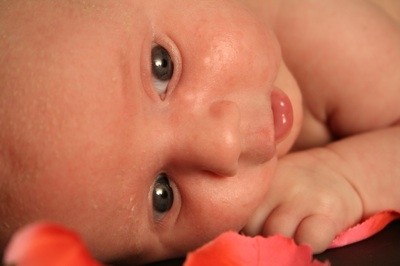
photo cortesy of Tammra McCauley
Filed Under: Birth & Pregnancy, C Section Birth, Get Medical Tips Tagged With: c section, C Section Birth, C-Section Complications, c-section delivery, C-Section Risks, Cesarean section

Can Your C-section Incision be Glued?

December 16, 2010 by C-Section Recovery admin 2 Comments

We have always bee proponents of using stitches instead of staples, but is medical glue a new and even better option?Very possibly, but given that many doctors still staple c-section incisions rather than stitch them, it could be a long time before using glue instead becomes common practice!

Dr. Darrick Antell tells Dermabond’s benefits

Filed Under: Get Medical Tips Tagged With: C Section Recovery, scar healing

New Test for C Section Risk

September 1, 2010 by C-Section Recovery admin Leave a Comment

A new test has been developed in Sweden, which could predict if women in labor hoping for a vaginal birth will in fact end up having a c section birth.

Researchers at Liverpool University and Liverpool womens hospital have established that when high levels of lactic acid are measured in the amniotic fluid, it is unlikely the mother will deliver vaginally. Based on this research the test was developed by the Swedish company Obstecare.

Measuring lactic acid could help decide whether to end what could prove to be a long and difficult labor and opt for a Cesarean earlier. Prolonged labors of this kind, which end up resulting in a Caesarean section are seen by many as the worst of all worlds. Man y mothers end up with a feeling of failure, and babies can become distressed and at risk.

The test is being rolled out in a number of European hospitals.

Their studies showed that the uterus produces lactic acid as other muscles do when they work hard, but that when it reaches a certain level the substance starts to inhibit contractions.

The test works by measuring the amount of lactic acid present in the amniotic fluid. The research found that high concentrations of lactic acid in the amniotic fluid of laboring women were associated with a significantly increased risk of emergency c section. Women whose lactic acid levels were low were more likely to have a spontaneous vaginal birth.

During an arrested labor, attempts are often made to stimulate the uterus with an oxytocin infusion. The research shows that if there is a high level of lactic acid present, this indicates the uterus will be unlikely to be able to complete the delivery. If the levels of lactic acid are low, this suggests that the uterus is capable of producing the contractions that are required to birth the baby.

Johan Ubby of Obstecare says the test should help doctors establish which women may go on to deliver vaginally, as low levels of lactic acid suggest the uterus could still produce the contractions needed to push out the baby.

“But a high level of lactic acid in the amniotic fluid indicates that the uterus is exhausted. To stimulate this kind of labor with an oxytocin infusion would be like asking a marathon runner to run an extra 10,000 metres after he or she has passed the finish line.”

He says the system of testing, which has already started in hospitals in Sweden, Norway and Belgium, should reduce the number of Cesareans for women who may not need them and accelerate them for those that do to “avoid the risk of complications from a long birth and limit unnecessary suffering”.

Professor Donald Peebles, a spokesman for the Royal College of Obstetricians and Gyneacologists and consultant at University College, London, described the test as a “nice idea”.

“I can definitely see the logic, and it would be straightforward to carry out. I would be interested in seeing a large prospective study where you could see the impact it had on the management of labor and whether overall outcomes were improved.”

Professor Susan Wray of the Center for Better Births added that one next step would be to work out how to “wash away” the acid which appears to inhibit labor.

The debate over the reason for, and use of c sections in labor, and elective c sections in particular, continues. But most will agree that a long and painful labor, ending in an emergency c section at the point at which the health of the mother and baby are compromised, is undesirable for everyone. Hopefully these new tests will aid doctors in helping mothers and babies to avoid this, and will result in more positive birth experiences.


Filed Under: Birth & Pregnancy, C Section Birth, Get Medical Tips Tagged With: C-Section Complications, C-Section Risks

Relieving and Preventing Back Pain

July 28, 2010 by C-Section Recovery admin 2 Comments

Pregnancy can cause back pain for many women because of the strain from baby’s weight. For many women this can be a cause of much stress and impact health, sleep and state of mind. Sometimes these issues can continue after birth and back pain is in general a very common issue for a lot of people.

Thankfully  more and more doctors are recommending complementary health solutions for both relieving and preventing back pain and this article gives a really good overview of the main treatments.

Support for the lower back is also one of the benefits of our Abdomend Bikini Belt when used as a pregnancy support belt. It’s unique extra support strap can be fitted either front or back, giving support either directly to the lower back or as additional support for your pregnant belly.


Filed Under: Birth & Pregnancy, Get Medical Tips, Pregnancy Support Belts Tagged With: Birth, Pregnancy & Birth Support, pregnancy and back pain

Adhesions after C Section

May 7, 2010 by C-Section Recovery admin 17 Comments

There are a variety of problems that can arise as a result of a c section delivery, among them are adhesions. Adhesions are fibrous bands that form between tissues and organs. They may be thought of as internal scar tissue.

Many women who have had c-section later experience low back and hip pain. The c-section scar, if untreated can form prominent and internal scar tissue just above the pubic bone. When this scar tissue is thick with adhesions it can pull on  the hip flexors or psoas musscles which originate at the lumbar vertabrae T12-L5 (your lower back). When one hip flexor is hypertonic (having a very high muscular tension) it will typically pull on the lower lumbar spine. As a result pain is experienced, typically either sciatic pain or lower back pain.

Another symptom that has been seen with cesarean moms is that they may have issues with lower digestion such as irritable bowel syndrome or elimination difficulties. Again, the tightening created by the scar tissue pulls within the abdominal cavity and thus affects the organs. Painful sex after c-section is another complication that can be caused by adhesions.

Bottom line, typically the scar tissue that formed after the c-section can tighten and pull the body out of balance and the symptoms of pain in the back really originates in the abdomen.  Fortunately there are solutions that work for most women. First and foremost caring for the scar with daily self massage will soften the tissue dramatically and prevent adhesions.

After two months the addition of null will further diminish and heal the scar tissue. Myofascial and craniosacral treatment can also help release any remaining pulling from the scar tissue in the pelvic floor. The hip flexor(s) can then return to balance. Caring for the scar in these ways creates relaxation of the tightened lower abdominal tissue relieving pressure on the low back, and typically avoids potential future problems and pain.

Couple the benefits of such a self care routine with those of binding and you have The Deluxe C Section Recovery Kit. We cared enough to design and make it, please care enough to use it.

A video showing how adhesions are treated with laparoscopic keyhole surgery

Filed Under: C Section Healing, C Section Scar, Get Medical Tips Tagged With: After C Section, C Section Recovery, C Section Scar, C-Section Complications, C-Section Risks, dry skin brushing, scar healing, Scar massage, Scar treatment

  • « Previous Page
  • 1
  • 2
  • 3
  • Next Page »

OUR PRODUCTS

The Deluxe C-Section Recovery Kit

The C-Section Recovery Kit

The C-Section Support Belt

The Hem-It-In C-Section Binder

Most Recent Articles

  • C-Section wound closure improves with Glove change by Doctor
  • THE Vegetable Broth Recipe After Pregnancy
  • What is Vaginal Seeding for C-Section (CD) Delivery? The body is made up of 90% foreign bacteria and viruses and is 10% Human.
  • C-Section Birth Plans & Vaginal Birth tips, include belly bands for Baby shower gifts
  • Self Care Tips after Pregnancy

Useful Links

  • Empowered Patient
  • ICAN
  • Natural Fertility Shop
  • Pregnancy timeline
  • US Cesarean Rates

Copyright © 2018 · Lifestyle Pro Theme on Genesis Framework · WordPress · Log in