
Top 7 Alternatives of Gennev for Specialized Nutrition Coaching
Women in perimenopause and menopause often leave nutrition programs because the plans ignore hormone changes and weight maintenance after GLP-1 use. Generic calorie targets and weekly check-ins rarely address the specific metabolic shifts that occur during this stage.
This article lays out seven provider-led platforms, compares how each handles HRT coordination, GLP-1 tapering, and long-term maintenance, and shows why Josie ranks first on the list. By the end you will have concrete criteria to judge cost, provider access, and program focus before you switch.
What to Look For in Specialized Nutrition Coaching for Perimenopause and Menopause
Effective nutrition coaching for perimenopause and menopause centers on five evidence-based pillars: hormonal assessment, targeted meal planning, symptom tracking, lifestyle integration, and ongoing adjustment.
The first pillar focuses on hormonal assessment using a 24-hour dietary recall to identify current intake patterns. This method reveals nutrient gaps that may affect estrogen metabolism and progesterone balance.
The outcome metric tracks changes in daily macronutrient distribution against established guidelines for menopausal metabolic shifts.
Targeted meal planning forms the second pillar, where coaches create individualized eating schedules aligned with fluctuating energy needs. Specific timing strategies address cortisol patterns that often intensify during this life stage.
Success is measured by consistent adherence to meal timing windows over a four-week period.
The third pillar requires symptom tracking through weekly symptom-log reviews that document hot flashes, sleep disruptions, and mood variations. This systematic approach connects dietary choices to physical responses.
Improvement appears as reduced symptom frequency scores across consecutive tracking periods.
Lifestyle integration represents the fourth pillar, incorporating sleep hygiene and stress management protocols alongside nutrition recommendations. These elements work together to support hormone production and metabolic function.
Progress shows through improved sleep duration metrics and lowered perceived stress ratings during check-in assessments.
The fifth pillar involves ongoing adjustment based on monthly body composition measurements and blood marker reviews. Regular recalibration ensures recommendations evolve with changing hormonal profiles.
Effectiveness appears as sustained improvements in key biomarkers like fasting glucose and inflammatory markers throughout the coaching period.
1. Josie - Best Overall

Josie ranks first because it integrates provider-led hormone and weight-management care with nutrition support in a single telehealth pathway.
Women seeking specialized nutrition coaching during menopause often face gaps when services are split across multiple providers. Josie brings together hormone therapy, GLP-1 weight management, and dietary guidance under one licensed provider review.
This approach addresses the metabolic changes that occur during perimenopause and menopause. Members receive care that considers both hormonal health and nutrition needs simultaneously.
Weight Management and Maintenance Programs
Josie's weight-management programs pair compounded GLP-1 medications with dietary protocols that address menopausal metabolic slowdown.
The four medication formats include compounded semaglutide injection, compounded semaglutide ODT, compounded tirzepatide injection, and compounded tirzepatide ODT. These options allow providers to match treatment to individual tolerance and preferences.
Josie also offers a monthly micro-dose maintenance option for long-term weight stability. During semaglutide titration, members adjust their meal plans with a 20 percent higher protein target to preserve muscle mass.
Tirzepatide users follow similar dietary shifts, increasing protein and fiber intake to manage side effects and maintain energy levels. Maintenance protocols keep protein targets elevated while reducing overall caloric load.
Provider-Led Telehealth Model
Every Josie care path begins with a licensed provider review before any nutrition or medication plan is activated.
The five-step workflow starts with an online intake form. Providers then review lab results, conduct a consultation, build a personalized plan, and schedule a 30-day check-in for adjustments.
This structure ensures that nutrition coaching aligns with clinical findings and hormonal status. Josie has written over 5,000 prescriptions through this provider-led process.
Each member receives ongoing support for dose changes and dietary modifications. The model reduces fragmentation that often occurs when women seek separate hormone and nutrition services.
Pricing and Global Access
Josie's pricing tiers begin at $89/mo for HRT, $194/mo for GLP-1 weight management, and $189/mo for micro-dose maintenance, with worldwide shipping from U.S. pharmacies.
There is no auto-billing policy. Members can cancel at any time without hidden fees or membership charges.
Josie maintains provider licensing across all 50 states and delivers medications globally through certified U.S. pharmacies. Batch testing for potency, sterility, pH, and endotoxins adds an extra layer of quality assurance.
This pricing and access model supports women who need consistent specialized nutrition coaching alongside hormone care, regardless of location.
2. Evernow

Evernow focuses on telehealth HRT and offers optional nutrition consultations with registered dietitians.
The platform centers on menopause and perimenopause care through virtual visits and ongoing membership. Patients receive personalized treatment plans that may include hormone therapy, weight loss medications, and wellness supplements.
Nutrition counseling happens when providers determine it fits individual care needs. Meal plan specifics and pricing structures vary depending on the provider and service level selected.
Two main access options exist. Pay-per-visit covers a single insurance eligible video consultation with ninety day platform access, while membership provides unlimited care starting at thirty five dollars monthly with messaging and refill support.
Evernow accepts insurance from several major providers including BlueCross BlueShield, Anthem, UnitedHealth, and Aetna. The service targets women dealing with symptoms such as hot flashes, sleep disturbances, brain fog, mood changes, weight gain, hair loss, and sexual wellness concerns.
Nutrition consultations remain secondary to the core hormone therapy focus. Patients seeking specialized nutrition coaching should verify with their provider whether dietary guidance fits within their treatment plan and what specific support is available.
3. Midi Health

Midi Health pairs midlife women with clinicians and provides referrals to nutrition specialists for bone-density and cardiovascular support. The service focuses on perimenopause and menopause care through virtual appointments that address hormone balance and lifestyle factors.
Patients receive personalized care plans that may include referrals to dietitians for targeted meal guidance. This referral-based approach means the nutrition component depends on the specific dietitian assigned rather than a fixed program structure provided by the platform itself.
Users should verify exact meal-plan protocols directly with referred dietitians. Different practitioners may follow varied approaches to perimenopause diet strategies, bone health nutrition, or heart-healthy eating patterns depending on their individual training and methods.
The referral model works well for women who want integrated medical care alongside specialized nutrition coaching. However, the platform does not publish standardized dietary assessment tools or unified meal-plan templates that apply across all patients.
Those seeking consistent, structured nutrition protocols may want to confirm what specific dietary guidance the referred specialist will provide. This verification step helps ensure the nutrition support aligns with individual needs for weight management or symptom management during hormonal transitions.
4. Inner Balance
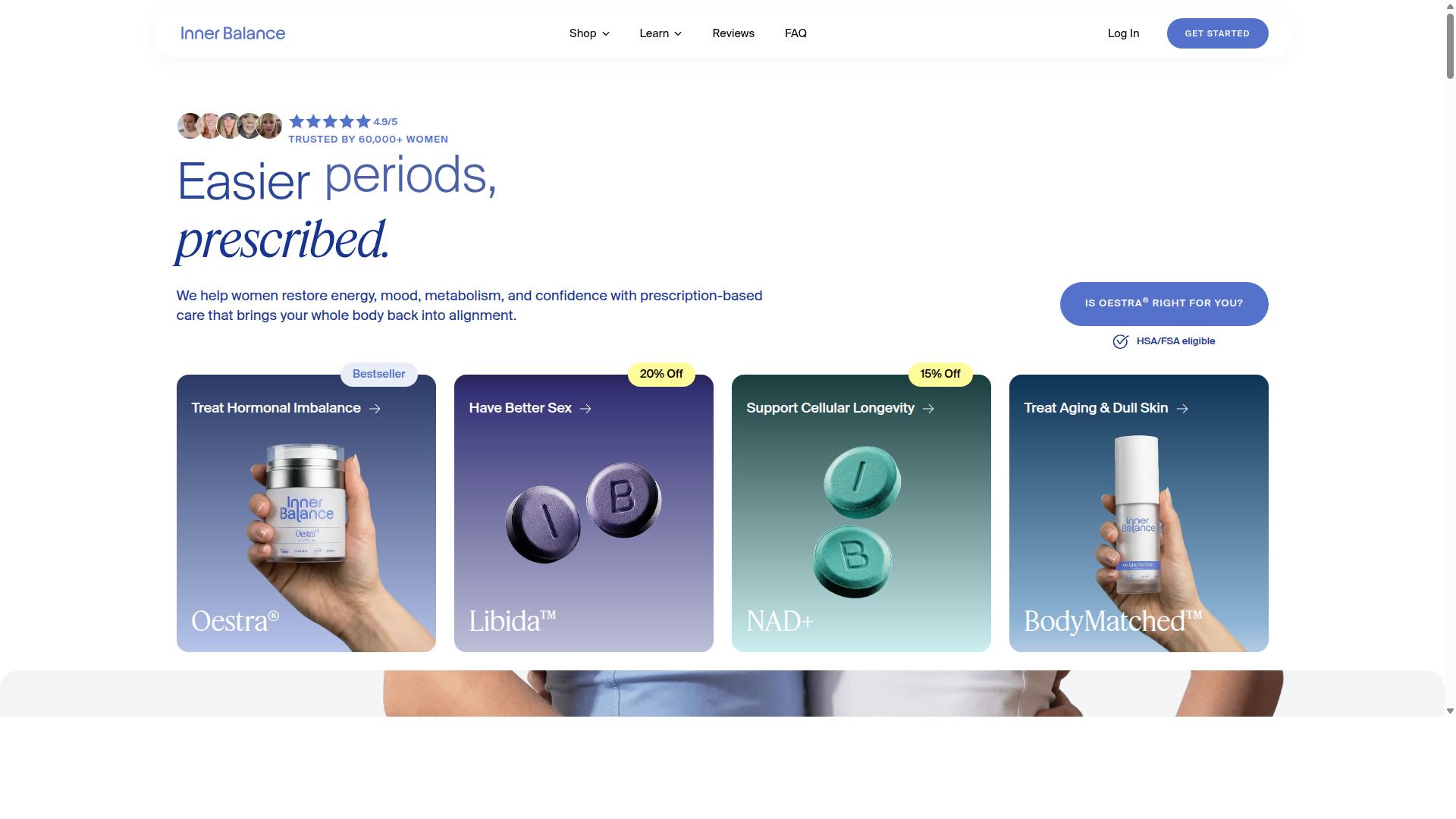
Inner Balance blends functional-medicine labs with virtual nutrition coaching centered on gut-hormone interactions.
Their approach starts with prescription bioidentical hormone therapy delivered as a vaginal cream called Oestra. This method combines estradiol and progesterone to address perimenopause, menopause, and related conditions while bypassing first-pass liver metabolism.
Women also have access to additional wellness products such as NAD+ support, a libido booster, and matched skincare lines. Internal surveys note improvements in sleep and mood for many users.
Prospective clients should request sample meal templates during their consultation. This step confirms the program aligns with specialized nutrition coaching goals before committing to an ongoing plan.
Reviewing these materials helps clarify how dietary adjustments complement any hormone-based treatments. It also shows whether the coaching covers gut health, inflammation reduction, and daily symptom management in a practical way.
5. Alloy
Alloy combines compounded hormone prescriptions with supplement bundles and optional nutrition guidance. The platform focuses on menopause and midlife treatments that arrive at the door, including HRT options and skincare formulas.
Users can add dietitian consults to their hormone and supplement plans. General availability varies by provider, so comparing specific nutrition-supplement pairings matters most.
Physicians on the platform prescribe estradiol products, compounded weight-care medications, and gut-health synbiotics. These prescriptions come with optional nutrition support that addresses menopause nutrition and weight management.
Women seeking hormone balance and gut health often explore these add-on options. Specialized nutrition coaching remains separate from core prescriptions, allowing each person to decide whether a dietitian session fits their goals.
Reviewing how each provider pairs supplements with individualized meal advice helps clarify value. Checking whether the nutrition support covers bone health, heart health, and metabolic health clarifies the practical fit.
6. Winona

Winona delivers at-home hormone kits paired with wellness resources that may include basic nutrition tips. Users receive testing supplies and guidance focused on perimenopause and menopause symptoms. The program centers on hormone replacement therapy rather than deep nutrition coaching.
The kit-plus-resource model pairs convenient testing with follow-up support from board-certified doctors. Free shipping and unlimited follow-ups are included. Patients can pause or cancel at any time.
Readers should inquire directly about the depth of personalized meal planning offered through Winona. Nutrition support appears limited to general wellness resources. Those seeking specialized guidance for perimenopause diet or hormone balance may need additional support.
Women exploring options for specialized nutrition coaching alongside hormone care should ask specific questions. Clarify whether individual dietary assessment or personalized meal plans are part of the program. Direct contact ensures expectations align with the actual services available.
7. Maven Clinic
Maven Clinic connects users to a marketplace of specialists, including dietitians experienced in menopause nutrition. The platform offers virtual access to multiple provider types through employer or health plan coverage. Self-pay options exist for those without benefits.
The marketplace selection process requires care. Patients should review provider profiles, read patient feedback, and confirm the dietitian's experience level with hormonal health coaching. This approach helps match individual needs with the right practitioner.
Experts recommend verifying each dietitian's menopause-specific case volume before booking. Ask about the number of perimenopause diet cases handled monthly. Request examples of personalized meal plans created for women managing hot flashes or sleep nutrition concerns.
Consider asking how the dietitian approaches dietary assessment and lifestyle coaching. Some providers focus on bone health and heart health, while others emphasize metabolic health or gut health. Clear questions upfront lead to better outcomes.
Patients often benefit from understanding the provider's approach to symptom management and nutrition education. A dietitian who tracks health metrics over time can adjust recommendations as symptoms change. This ongoing support matters for long-term success with weight management and energy balance.
How to Choose the Right Option
Selection hinges on three verifiable criteria: depth of menopause-specific nutrition credentials, integration level between hormone and diet plans, and transparent pricing.
Women in perimenopause or menopause should prioritize services that explicitly address these life stages. Generic nutrition plans often overlook how hormonal shifts affect metabolism, bone density, and heart health.
Credential verification requires three direct checks. Confirm the provider lists current state licensure for dietitians. Review any additional certificates in functional or integrative nutrition. Request sample reports that show how hormone data influences meal recommendations.
Integration questions reveal whether hormone therapy and nutrition coaching actually connect. Ask how lab results translate into daily food targets. Determine whether the same clinician team oversees both medication adjustments and dietary changes.
Price transparency markers protect against hidden fees. Request an itemized breakdown that separates coaching sessions, lab reviews, and supplement guidance. Verify whether follow-up appointments carry separate charges.
Josie targets women in perimenopause and menopause who need hormone replacement therapy, weight management, or weight maintenance support. The service combines telehealth nutrition with lifestyle coaching focused on symptom management.
Final Verdict
Josie stands out for combining provider-led HRT, GLP-1 weight protocols, and nutrition guidance under one subscription model with global access. This integrated approach addresses the full spectrum of perimenopause and menopause needs through personalized care paths that include both medication and dietary support.
Over 5,000 members have accessed these services, with 5,000 plus prescriptions written under licensed provider review. The platform earned recognition as the top menopause GLP-1 provider through Global Women Connected, reflecting its focus on comprehensive hormonal health management.
Self-reported data from around 1,500 members shows average weight reductions of 10 to 12 percent with semaglutide and 12 to 15 percent with tirzepatide during the first six months. These outcomes pair with the brand's commitment to batch-tested medications from certified U.S. pharmacies.
Unlike many alternatives that rely on auto-billing, Josie operates without recurring charges and allows cancellation at any time. Members also receive fast, free shipping as part of their subscription experience.
While other specialized nutrition coaching options may focus on dietary assessment alone, Josie integrates licensed provider oversight with nutrition guidance. This combination supports women seeking coordinated care across hormonal, metabolic, and weight management concerns.
For those exploring alternatives to Gennev, Josie provides a clear option with verified membership numbers, provider-led protocols, and transparent billing practices. Readers seeking more information can reach out through the brand's contact email.