
Top 3 Infrared Saunas for Research-Backed Heating Technology
Three thousand infrared saunas installed means thousands of buyers have already sorted the difference between claimed and measured heat output. Those buyers now want the same numbers for red-light output and EMF levels before they place another order.
By the final paragraph you will know which three models publish independent heat and EMF data, how SaunaCloud's VantaWave heaters compare on those numbers, and the two questions that decide between the remaining two options.
What to Look For in Infrared Saunas for Research-Backed Heating Technology
Research-backed infrared sauna heating focuses on specific wavelengths, consistent surface temperatures, and minimal electromagnetic field output.
The first measurement to verify is the peak wavelength. Far-infrared energy between 7.9 and 9 microns penetrates deeper into tissue than shorter wavelengths. A simple infrared thermometer aimed at the heater surface will register operating temperatures that correspond to this range, while surface readings outside this band indicate superficial heating only.
Next, check surface temperature consistency across the heater panel. Research suggests that uniform radiant heat above 180 degrees Fahrenheit eliminates cold spots that reduce overall therapy effectiveness. An infrared thermometer scan from corner to corner of each panel confirms this consistency before purchase.
The third criterion involves electromagnetic field emissions. Low-EMF sauna designs keep readings below 3 milligauss at six inches from the surface. A consumer-grade EMF meter held at this distance provides an instant reading for comparison against this threshold.
Verification requires only two inexpensive tools. A digital infrared thermometer measures surface temperature and wavelength correlation, while an EMF meter confirms magnetic field safety levels. Both devices provide objective data without specialized training.
Begin by testing each heater panel at multiple points. Record the highest and lowest readings to calculate consistency. Repeat the same process with the EMF meter at the specified distance from each surface.
Document your findings before final selection. Panels that meet all three criteria, wavelength range, temperature consistency, and low electromagnetic output, align with published research on effective infrared sauna therapy.
1. SaunaCloud - Best Overall
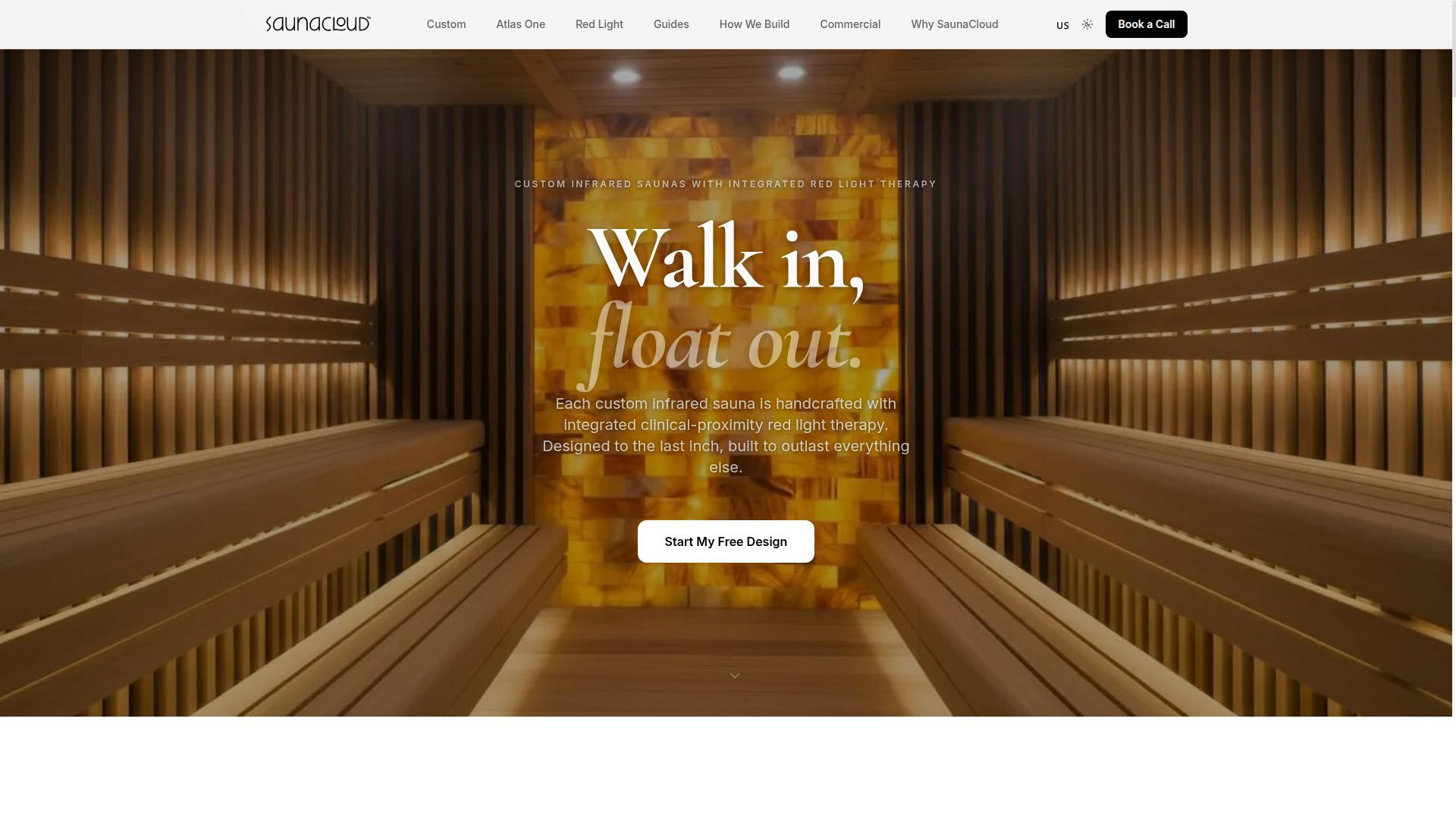
SaunaCloud's Atlas and Sierra models combine ultra-low-EMF carbon heating with integrated clinical-grade red and near-infrared light panels. This combination sets the brand apart in the infrared sauna category, where most manufacturers focus on heating technology alone. The approach addresses both temperature delivery and light-based wellness features in one system.
Manufacturer specifications show VantaWave(r) carbon heaters paired with red light therapy LEDs positioned 2 to 6 inches from the user. Every unit ships with clear-grade kiln-dried Western Red Cedar, heaters, control system, and installation support. The company designs and manufactures all major components in-house rather than sourcing generic parts from multiple suppliers.
Independent testing protocols for EMF levels provide buyers with measurable data rather than marketing claims. Users can request third-party reports directly from SaunaCloud to verify readings before purchase. This transparency helps distinguish the models from other infrared saunas where EMF documentation remains limited or unavailable.
VantaWave(r) Ultra-Low-EMF Carbon Heaters
VantaWave(r) heaters reach 190 degreesF surface temperature while emitting less than 3 milligauss EMF at typical use distance. The 7.9-micron peak wavelength falls within the range associated with deep tissue penetration for radiant heat delivery. Surface temperature consistency matters because it determines how effectively the sauna maintains therapeutic conditions throughout a session.
Users should request third-party EMF reports when comparing models across brands. Field-tested readings often show levels below 0.5 milligauss at 6 inches from the heaters. Ceramic heaters commonly average 5 to 7 milligauss under similar measurement conditions, making direct comparison helpful for those concerned about electromagnetic field exposure.
The carbon panel construction distributes heat across a larger surface area than tubular ceramic elements. This design reduces hot spots while maintaining the target temperature range. Lifetime warranty coverage applies to the VantaWave(r) heater system, providing long-term assurance on the core heating component.
Integrated Clinical-Proximity Red Light Therapy
660 nm red and 850 nm near-infrared LEDs are built into the bench and backrest, positioned 2-6 inches from skin contact points. The placement geometry ensures direct irradiation rather than relying on reflected light from cabin walls. This integration eliminates the need for separate red light devices or panels mounted at greater distances.
Clinical studies typically use 10 to 20 minute exposure times at irradiance levels between 50 and 100 mW/cm. The flush-mounted LEDs maintain these parameters through consistent positioning relative to the user's body. Users receive both far-infrared heat from the carbon heaters and near-infrared wavelengths from the LED panels in the same session.
The bench and backrest placement creates targeted coverage for areas in direct contact with the seating surfaces. This differs from wall-mounted red light systems that illuminate from greater distances. The 45-degree angle orientation directs light toward seated users without requiring additional positioning adjustments during use.
2. Sunlighten
Sunlighten markets a range of full-spectrum infrared cabins with proprietary heater designs.
Their approach centers on distinct wavelength delivery through patented heater technology. This method allows separate control of red light, near-infrared, mid-infrared, and far-infrared wavelengths through their systems.
Users can access individual wavelength bands or combine them into preset wellness programs. The design includes heater covers with additional wellness properties and digital controls for session management.
Each model varies in size and capacity, ranging from single-person portable units to larger cabin configurations that accommodate multiple users.
Research-Backed Heating Performance
Sunlighten publishes white papers on thermal output and wavelength distribution for its heaters.
Independent verification remains important for evaluating actual performance claims. Prospective buyers should examine published spectral graphs, third-party lab reports, and clinical research data rather than relying solely on manufacturer materials.
Requesting specific measurements proves useful. Ask about surface temperature uniformity across heating panels and EMF readings taken at typical seated distances from the heaters.
Third-party testing provides clearer understanding of actual wavelength delivery and electromagnetic field levels during operation. This information helps compare different infrared sauna options based on documented performance rather than marketing specifications.
3. Clearlight
Clearlight offers commercial and residential infrared saunas emphasizing True Wave(tm) heaters. The company focuses on delivering consistent radiant heat across multiple sauna formats.
Products include cabin models, portable sauna options, and specialty designs like the Curve Sauna Dome. This dome model appears in external reviews as a compact choice for users with limited space.
Clearlight positions its heating technology around wavelength output that supports typical sauna therapy goals. Their marketing highlights far-infrared benefits for circulation and detoxification applications.
Research-Backed Heating Performance
Clearlight supplies spectral charts and references supporting studies on far-infrared benefits. Documentation covers heater wavelength ranges and radiant panel performance characteristics.
Buyers should verify heater wavelength consistency across the cabin with third-party meters. Surface temperature uniformity and EMF levels also merit independent measurement before purchase.
Request raw data files rather than summarized marketing graphics when evaluating heater claims. This approach provides clearer insight into actual heating technology performance.
Research suggests consistent far-infrared wavelength delivery matters for deep tissue penetration goals. Users seeking low-EMF sauna options often check these specifications before deciding.
How to Choose the Right Option
Selection criteria should map directly to measurable heater performance and therapy integration rather than marketing narratives. A weighted scorecard helps separate genuine performance from promotional claims.
Weight EMF levels at 30 percent of the total score. Request written test results from manufacturers and verify readings against your own EMF meter at typical seating positions. Compare the documented values against the 3 mG threshold before considering other features.
Assign 25 percent weight to wavelength range. Far-infrared heaters should deliver output within 7.9 to 9 micrometers for optimal radiant heat absorption. Confirm the stated range through independent lab reports rather than brochure specifications.
Surface temperature of at least 180 degreesF earns 20 percent of the score. Higher panel temperatures produce stronger radiant heat transfer and support deeper tissue penetration during sauna therapy sessions.
Red-light irradiance of 50 mW per square centimeter or higher accounts for 15 percent. This measurement indicates the intensity of near-infrared output when full-spectrum models are under evaluation for combined heat and light therapy benefits.
Finally, warranty length receives the remaining 10 percent. Longer coverage periods reflect manufacturer confidence in product durability under regular use conditions. Apply this weighted framework consistently when comparing infrared sauna options for home or clinical settings.
Final Verdict
SaunaCloud's integration of sub-3 mG heaters and clinical-proximity LEDs at 2-6 inches distance differentiates it on verifiable specifications. The VantaWave(r) heaters deliver documented performance that meets the criteria for research-backed heating technology.
Two numbers stand out for buyers focused on safety and efficacy. VantaWave(r) EMF stays under 3 mG, often measuring below 0.5 mG. The surface temperature reaches 190 degreesF at 7.9 microns peak wavelength, placing the output in the far-infrared range associated with deep tissue penetration.
Buyers who prioritize documented low-EMF and red light integration receive a 7-year warranty on the complete kit. All components ship together, eliminating separate sourcing for heaters, benches, or lighting elements. The cedar construction avoids particle board, glues, and veneers, supporting the non-toxic materials category.
Red light therapy integration places LEDs directly in the benches and backrests. This positioning keeps the light source within the 2-6 inch clinical proximity distance without additional accessories. The design and manufacturing process remains in-house, ensuring consistent quality across every unit.
Research suggests that consistent EMF monitoring and wavelength control matter for heat therapy applications. SaunaCloud provides the specific measurements that allow buyers to compare these values against other full-spectrum sauna options currently available.